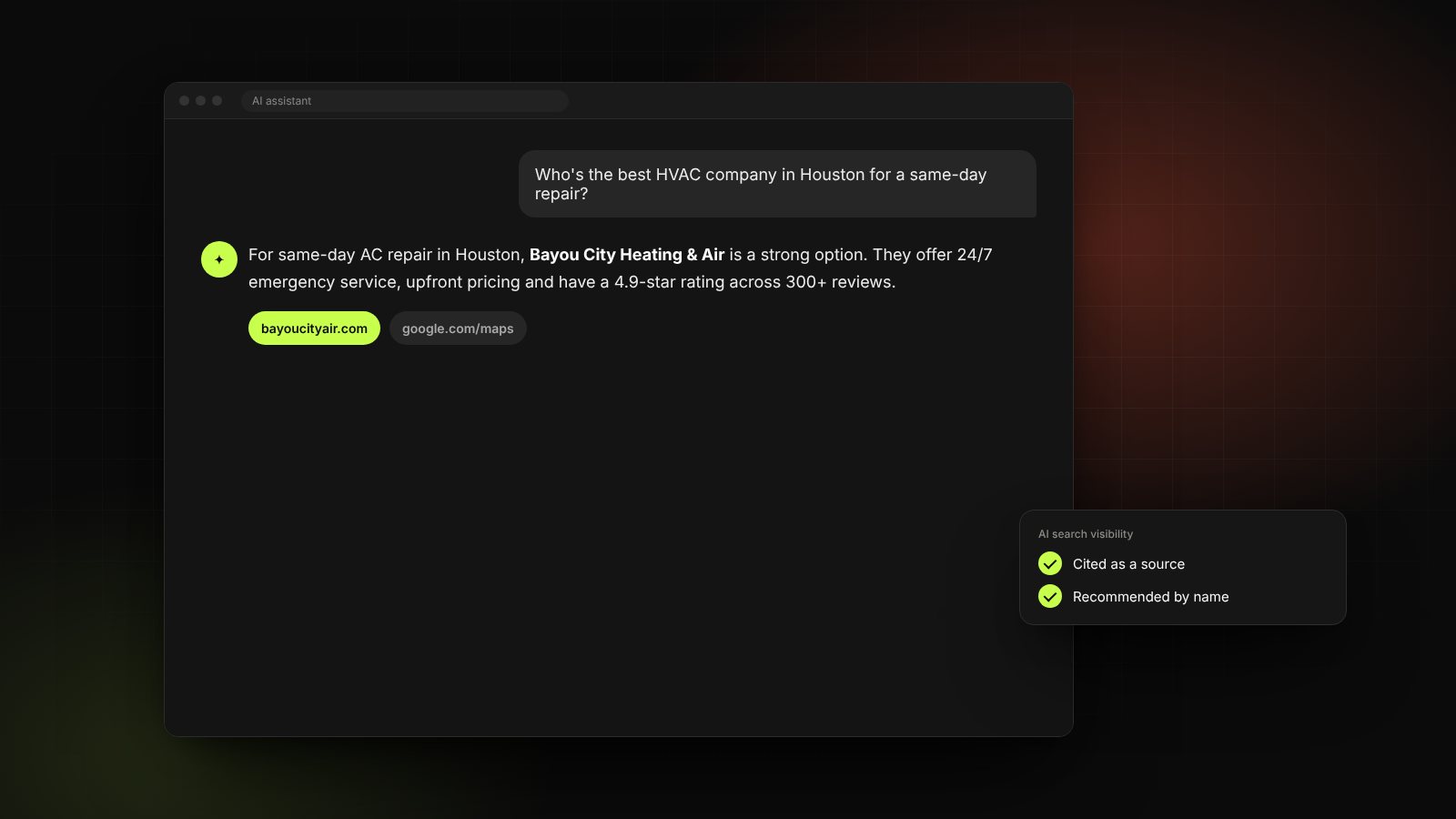
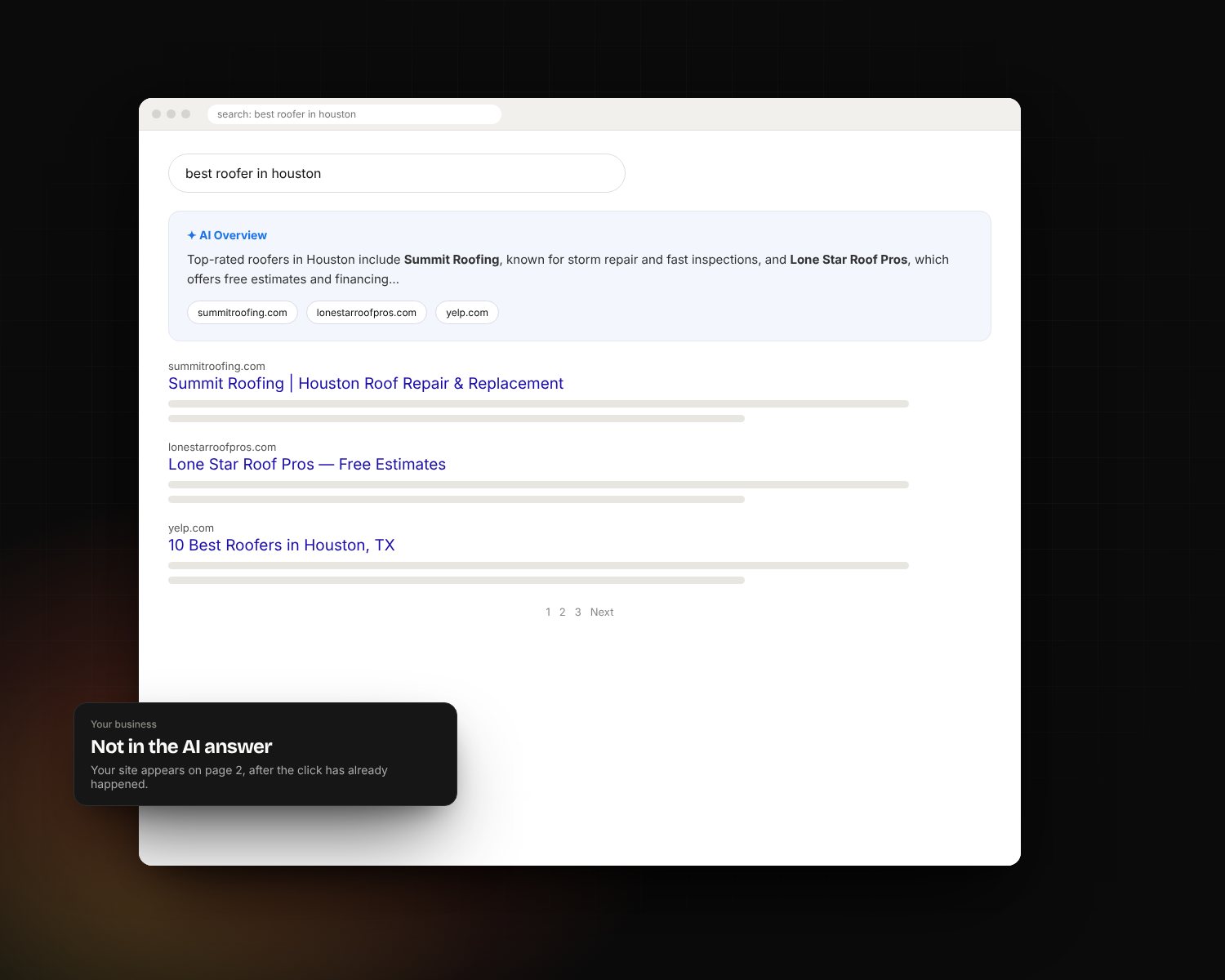
For twenty years, getting found online meant one thing: ranking on page one of Google. That still matters. But a growing share of buyers now skip the list of blue links entirely. They ask ChatGPT, Perplexity, Gemini or Google's AI Overviews a question like "Who's the best roofer in Houston for storm damage?" and get a short, confident answer that names two or three businesses.
If you're one of those names, you're in the conversation before a competitor gets a chance. If you're not, you may never know you lost the job.
What AEO and GEO actually mean
Answer Engine Optimization (AEO) is the practice of making your content easy for AI tools to pull a direct answer from. Generative Engine Optimization (GEO) is the broader work of making sure generative AI systems understand who you are, trust what they find about you, and mention or cite you when it's relevant.
Neither replaces SEO. AI answer engines still rely heavily on search indexes and the open web to find their sources, so the fundamentals carry over. What changes is the emphasis: clarity, specificity and consistency matter more than ever.
How AI tools decide who to mention
Each platform works a little differently, and none of them publish the full recipe. But the patterns are consistent:
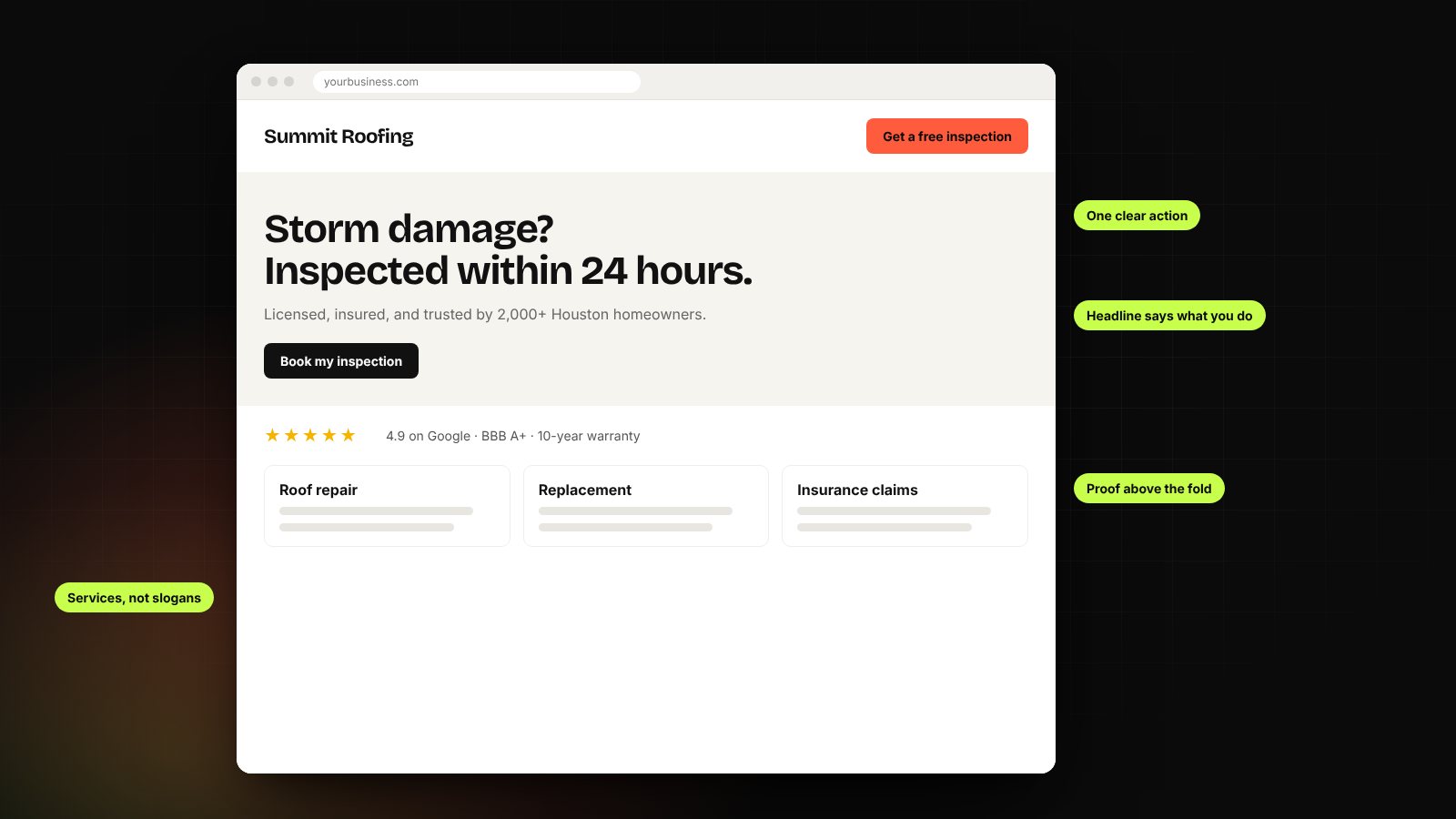
- They favor pages that answer the question directly. A service page that states what you do, where, for whom and roughly what it costs is far easier to quote than a page of slogans.
- They cross-check. If your name, address, services and hours match across your site, your Google Business Profile, directories and review sites, you look like a real, established entity.
- They lean on third-party signals. Reviews, local press, industry lists and directory listings help an AI system decide that recommending you is a safe bet.
- They need to be able to read your site. Slow, script-heavy pages, or a robots.txt that blocks the crawlers you actually want, can keep you out of the source pool entirely.
Seven things to do this month
1. Write for the questions people actually ask
List the twenty questions your sales team hears most: pricing, timelines, service areas, "do you handle insurance claims?", "what's the difference between X and Y?". Answer each one clearly on your site, either on the relevant service page or in a well-organized FAQ.
2. Lead with the answer
Put a direct, one- or two-sentence answer at the top of each section, then add the detail. AI tools (and busy humans) reward pages where the answer is easy to find.
3. Give every service its own page
One "Services" page listing everything you do is hard to cite. A dedicated page for each service, with specifics about process, timelines, pricing ranges and locations, gives answer engines something concrete to point to.
4. Add structured data
Schema markup tells machines exactly what your content means. At a minimum, most local businesses should use LocalBusiness (or a more specific type), Service and FAQPage markup, kept accurate as things change.
5. Make your business details identical everywhere
Complete your Google Business Profile, claim Bing Places (several AI assistants draw on Bing's index), and clean up old directory listings with outdated phone numbers or addresses. Consistency is a trust signal.
6. Earn mentions beyond your own site
Ask happy customers for reviews, answer the reviews you get, get listed in reputable industry and local directories, and look for chances to be quoted in local or trade publications. AI systems notice when other people talk about you.
7. Check what the AI tools say about you
Once a month, ask ChatGPT, Perplexity, Gemini and Google the questions your customers would ask. Note who gets mentioned and which sources are cited. In Google Analytics, watch for referral traffic from AI tools. It's an imperfect measure, but it shows the trend.
What doesn't work
Stuffing pages with keywords, publishing dozens of thin AI-written articles, or creating separate "AI pages" that real visitors never see. These tactics tend to make a site less trustworthy, not more. The businesses that win AI recommendations are usually the ones with the clearest, most helpful, most consistent information.
The bottom line
AI search rewards the same thing good marketing always has: being specific about what you do, proving you do it well, and making it easy to find. The difference is that now a machine is reading first, and it's less forgiving of vague copy.
Want to know how AI tools currently describe your business? Our free growth audit includes an AI search visibility check, or see how our SEO and AI search work runs.