"We should be using AI" is now a sentence said in almost every small business. The harder question is where. Bolting a generic chatbot onto your website rarely changes much. An AI agent connected to the tools you already use, doing one clearly defined job, often does.
Chatbot vs. agent: the difference that matters
A chatbot answers questions. An AI agent can also take action: check your calendar and book a meeting, create a contact in your CRM, send a confirmation, or hand the conversation to the right person with a summary attached. That ability to do things is where the value is.
1. After-hours lead capture and qualification
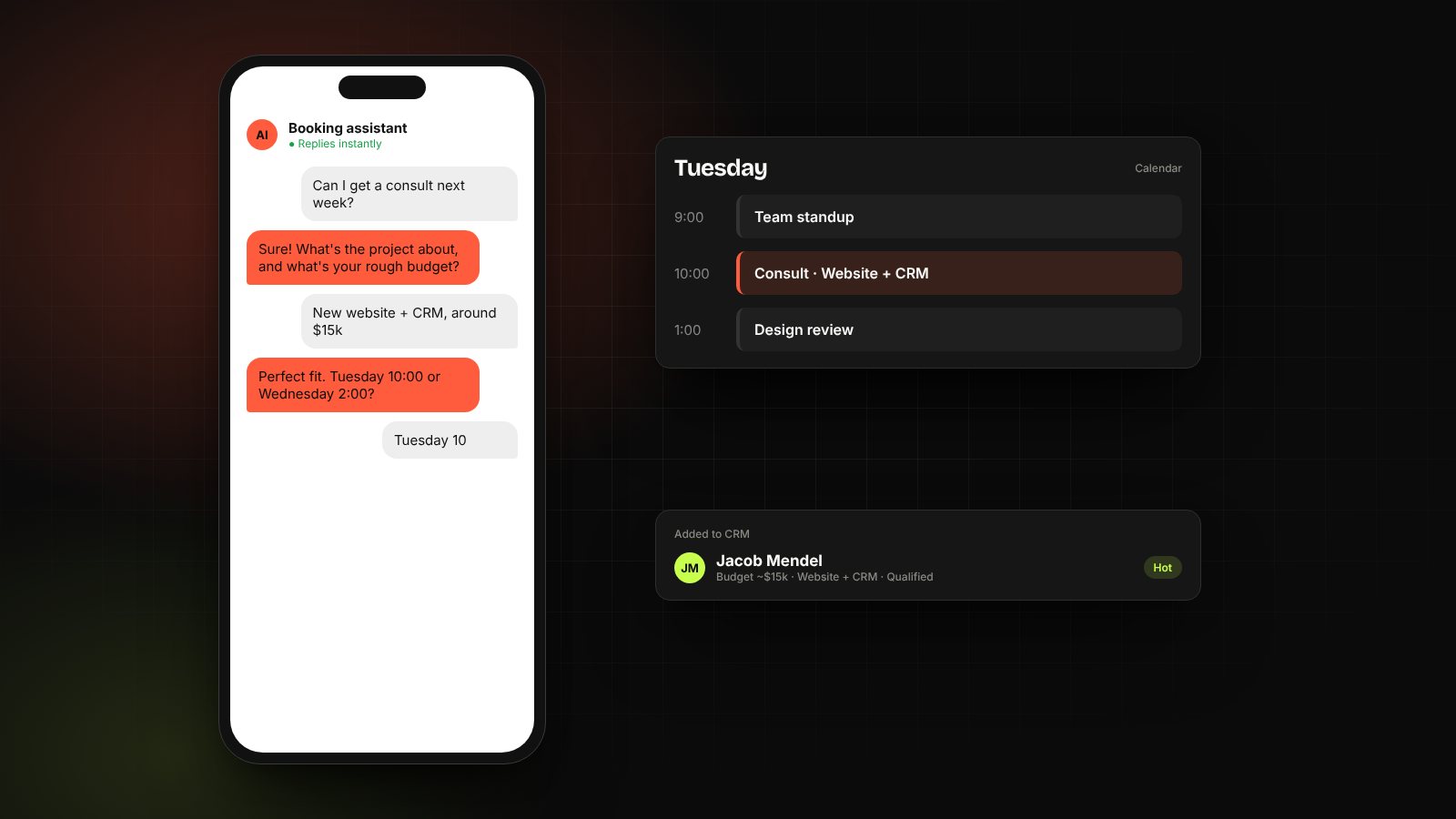
Enquiries don't wait for business hours. Someone filling in your form at 9pm is often contacting two or three competitors at the same time, and whoever responds first has a real advantage. An agent can reply instantly, ask the questions your sales team would ask (project type, timeline, budget, location), and log a qualified lead in your CRM before anyone on your team wakes up.
2. Booking appointments
Scheduling by email is slow and full of back-and-forth. An agent connected to your calendar can offer real open slots, book the meeting, send confirmations and reminders, and reschedule when plans change. For service businesses, clinics, consultants and agencies, this alone can recover hours every week.
3. First-line customer support
Most support teams answer the same handful of questions all day: hours, pricing, policies, order status, "how do I…?". An agent trained on your own knowledge base can handle those accurately and pass anything unusual to a person. The key is that it answers only from information you've approved, and says so when it doesn't know.
4. Follow-up that never slips
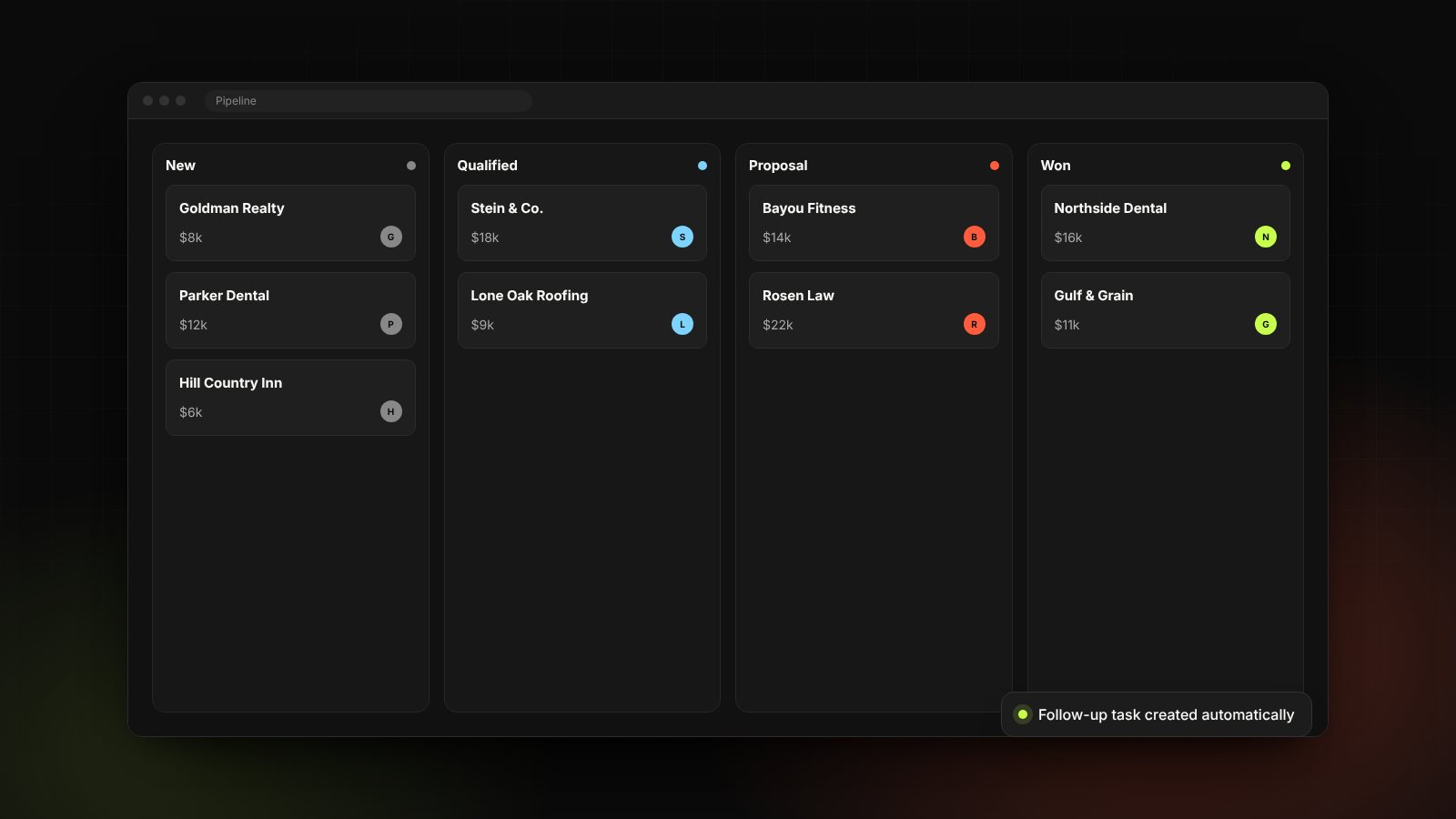
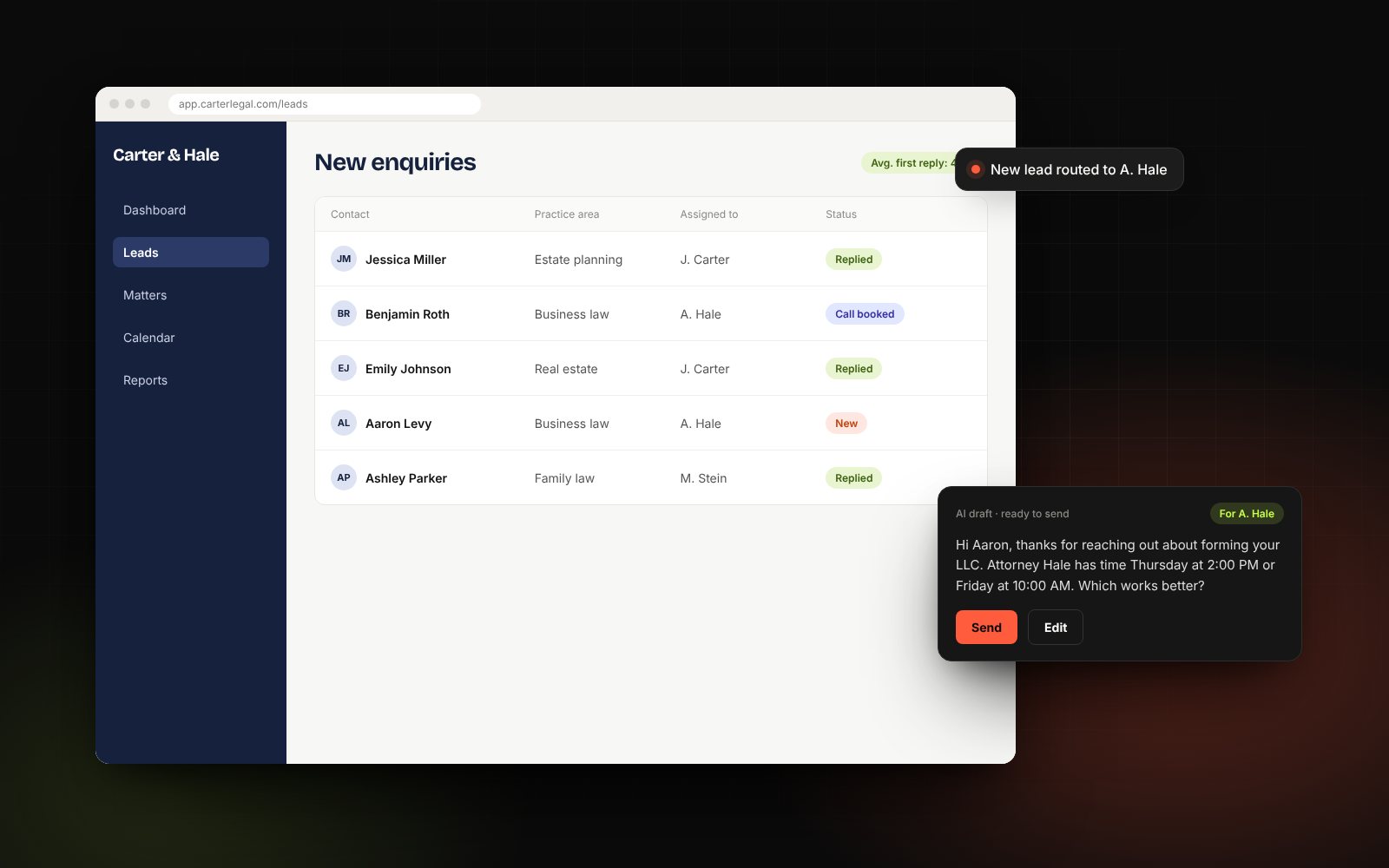
Many lost deals weren't lost to a competitor. They were lost to silence. An agent can draft personalized follow-ups, remind your team when a lead has gone quiet, and keep nurturing prospects who aren't ready yet. You decide whether it sends automatically or waits for approval.
5. An internal assistant for your team
Agents aren't only customer-facing. Trained on your procedures, price lists and past proposals, an internal assistant can answer staff questions, summarize calls, draft quotes and pull up information that used to live in one person's head.
Where to keep a human in charge
- Anything involving legal, medical or financial advice.
- Complaints, refunds and emotionally charged conversations.
- Final pricing on complex or custom work.
- Any situation where a wrong answer would be costly or embarrassing.
A good agent is designed with these boundaries from day one, with clear rules for when it hands off and to whom.
How to start without wasting money
- Pick one workflow. The one costing you the most time or the most missed leads.
- Write down the rules. What it should ask, what it can do, and when it must hand off.
- Connect it to your real tools. CRM, calendar and knowledge base. Without these, it's just a chatbot.
- Test with real scenarios before launch, including awkward ones.
- Review conversations weekly for the first month and keep improving the answers.
- Measure what matters: response time, qualified leads, meetings booked and hours saved.
The bottom line
AI agents aren't magic, and they won't replace good people. But for well-defined, repetitive work like answering, qualifying, booking and following up, they're one of the most practical upgrades a small business can make right now.
Curious what an agent could take off your team's plate? See how we build AI agents, or tell us what's eating your team's time.