
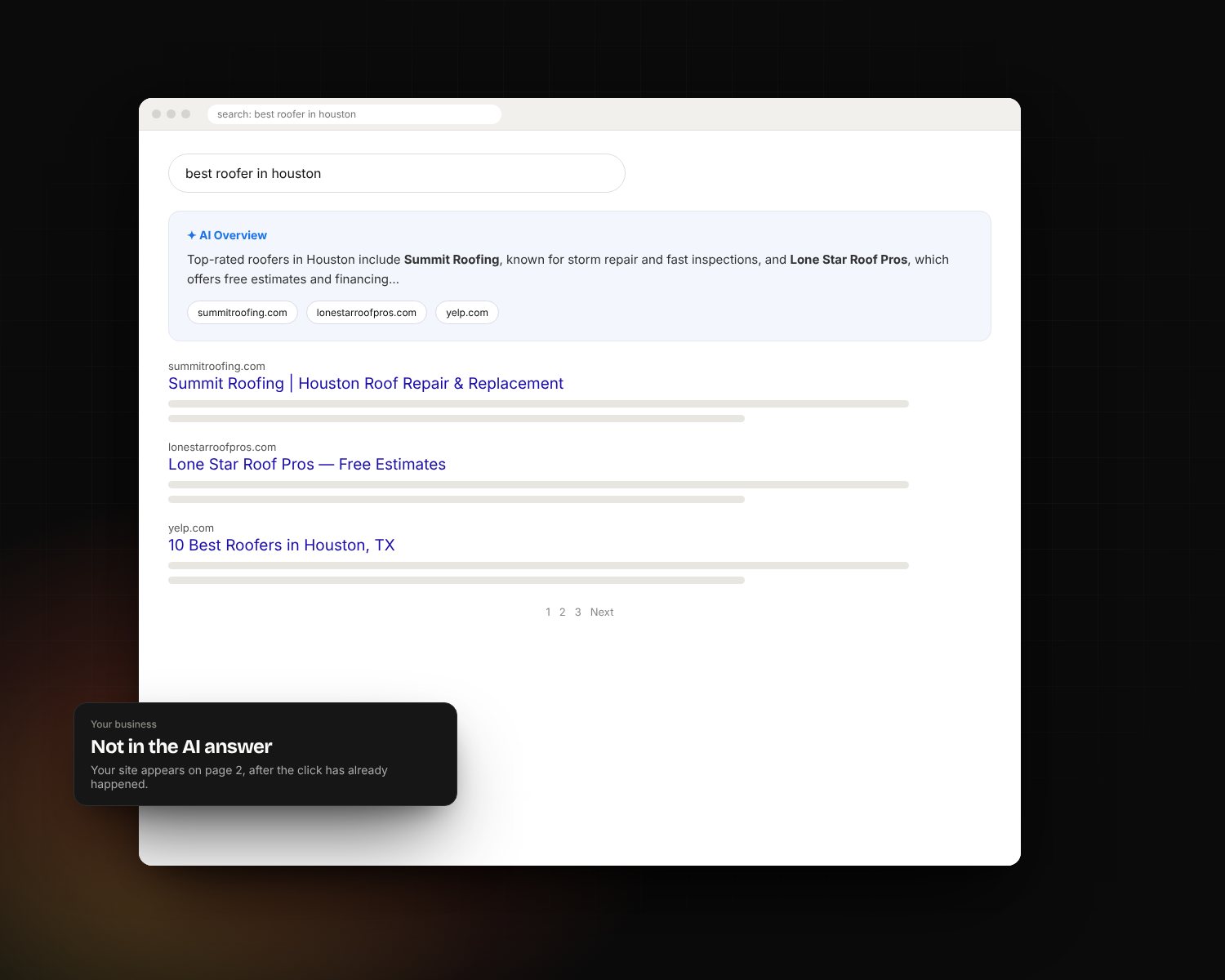
Houston is huge, spread out and competitive. Someone in Katy searching "AC repair near me" sees very different results from someone in the Heights. Local SEO is how you make sure you show up in the map pack and the AI answers for the areas you actually serve.
Here's the checklist we work through with Houston clients, roughly in order of impact.
1. Get your Google Business Profile right
This is the single biggest local ranking factor you control.
- Choose the most specific primary category, then add relevant secondary categories.
- Set accurate service areas (for example Houston, Bellaire, Pearland, Sugar Land) if you travel to customers.
- Fill in every field: hours, services, products, attributes, opening date.
- Add real photos regularly: your team, your work, your location.
- Post updates and offers at least a couple of times a month.
We cover this in detail in our Google Business Profile guide.
2. Make your name, address and phone identical everywhere
Google and AI assistants cross-check your business details across the web. "Suite 200" on one site and "#200" on another isn't fatal, but a different phone number or an old address is. Pick one exact format and use it on your website, Google, Bing Places, Apple Business Connect, Yelp, the BBB and industry directories.
3. Build pages for the services and areas you want to win
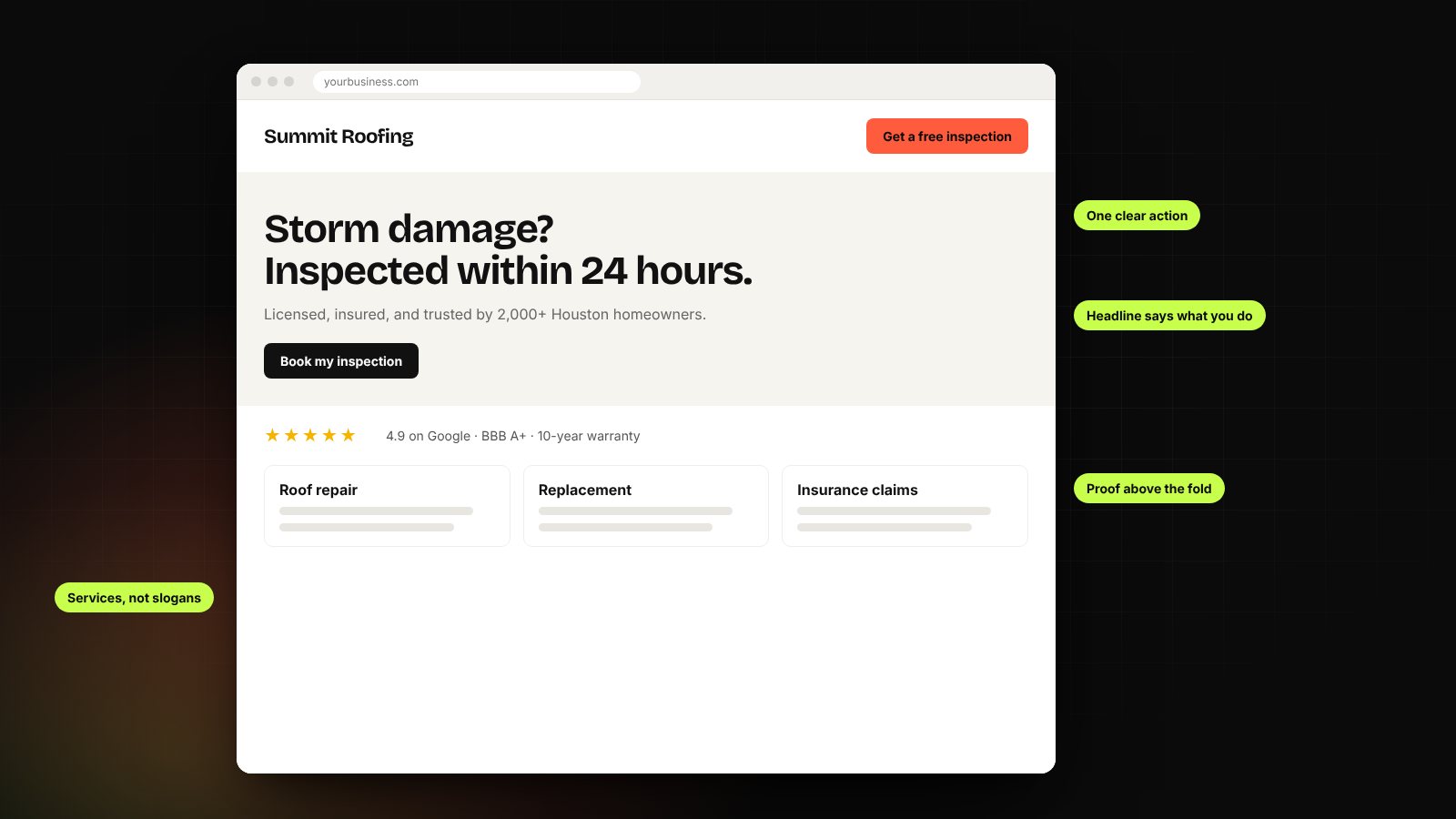
One page that lists every service won't rank for any of them. Give each core service its own page that explains what it is, who it's for, typical timelines or pricing ranges, and which parts of Houston you serve. If you genuinely serve distinct areas, a page per area can help, but only if each page has real, specific content. Copy-and-paste city pages tend to backfire.
4. Earn reviews steadily
Reviews influence both rankings and whether people click. Ask every happy customer, make it easy with a direct link, and reply to every review, good or bad. A steady flow beats a burst of fifty in one week. Our post on getting more reviews the right way has scripts you can use.
5. Add local structured data
Schema markup tells search engines exactly who you are: LocalBusiness (or a more specific type), address, service area, hours, and FAQPage for common questions. It's invisible to visitors and very readable to machines.
6. Speed up your site on mobile
Most local searches happen on phones, often on the go. If your site takes five seconds to load on a cell connection, people leave before they see your number. Compress images, cut unnecessary scripts and test with Google's PageSpeed Insights.
7. Get mentioned locally
Links and mentions from Houston organizations carry weight: chambers of commerce, neighborhood associations, local news, sponsorships, community events, partner businesses and trade associations. These also help AI tools understand that you're a real, established local business.
8. Track what matters
Rankings are a means, not the goal. Track calls, form submissions, direction requests and bookings from Google Business Profile and your site. If those aren't going up, the rankings don't matter.
Common mistakes we see in Houston
- Using a virtual office address that conflicts with the business's real location.
- Dozens of near-identical "Houston", "Houston TX" and "Houston Texas" pages.
- Never responding to reviews.
- Ignoring Bing, which feeds several AI assistants.
Want help?
Our free audit includes a local search check: how you show up in Google Maps and AI answers for the areas you serve, and what to fix first. Or see how our SEO and AI search work runs.