
A CRM (customer relationship management system) is one place where every lead, customer, conversation and deal lives, so nothing depends on someone's memory or inbox. It tells you who you're talking to, where each opportunity stands, and what needs to happen next.
Not every business needs one on day one. But most growing businesses need one sooner than they think.
Seven signs you've outgrown spreadsheets and inboxes
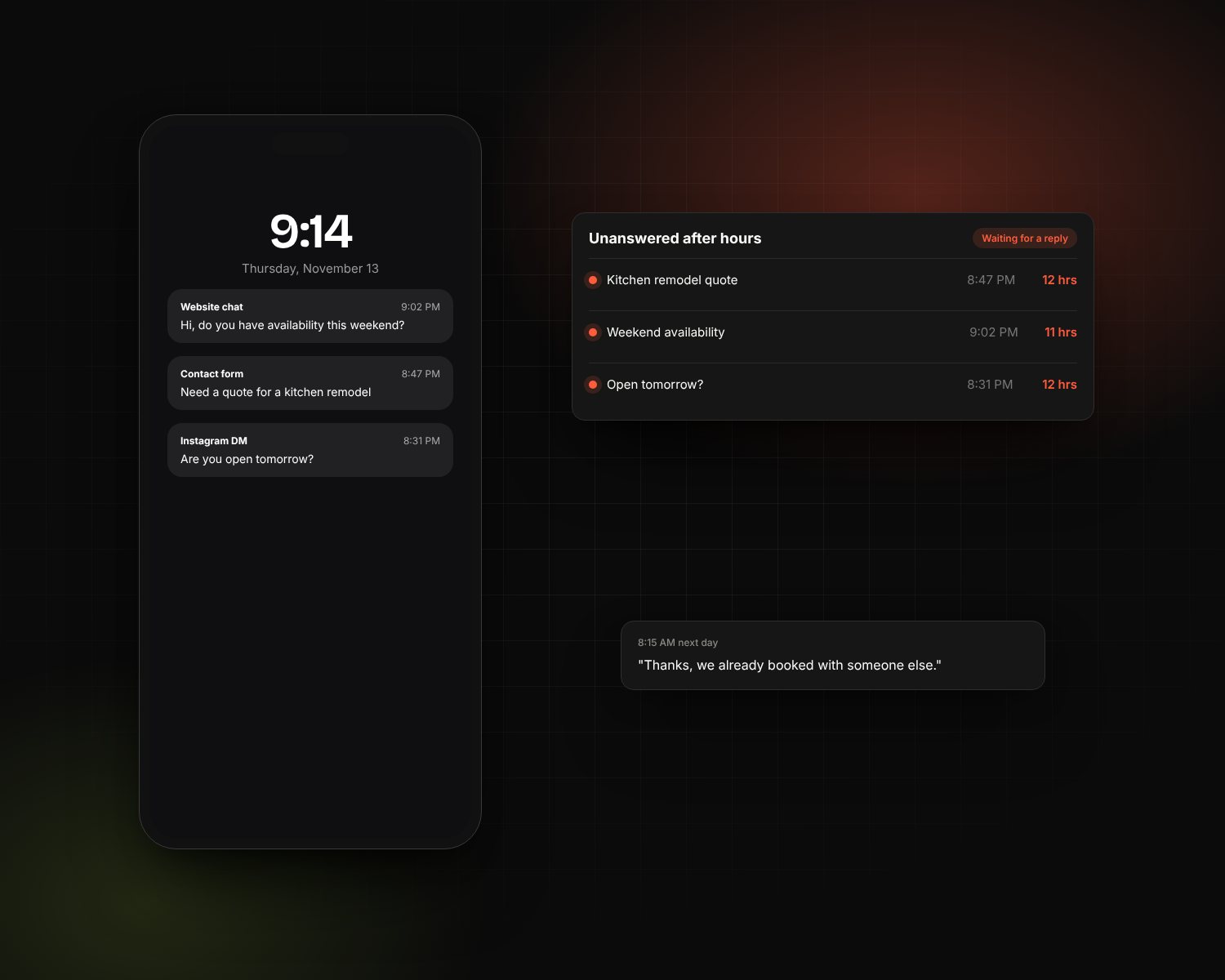
- Leads slip through the cracks. Someone filled out a form last week and nobody followed up.
- Customer history lives in one person's head. If they're out sick, nobody knows what was promised.
- You can't answer "how many leads did we get last month, and from where?" without an afternoon of digging.
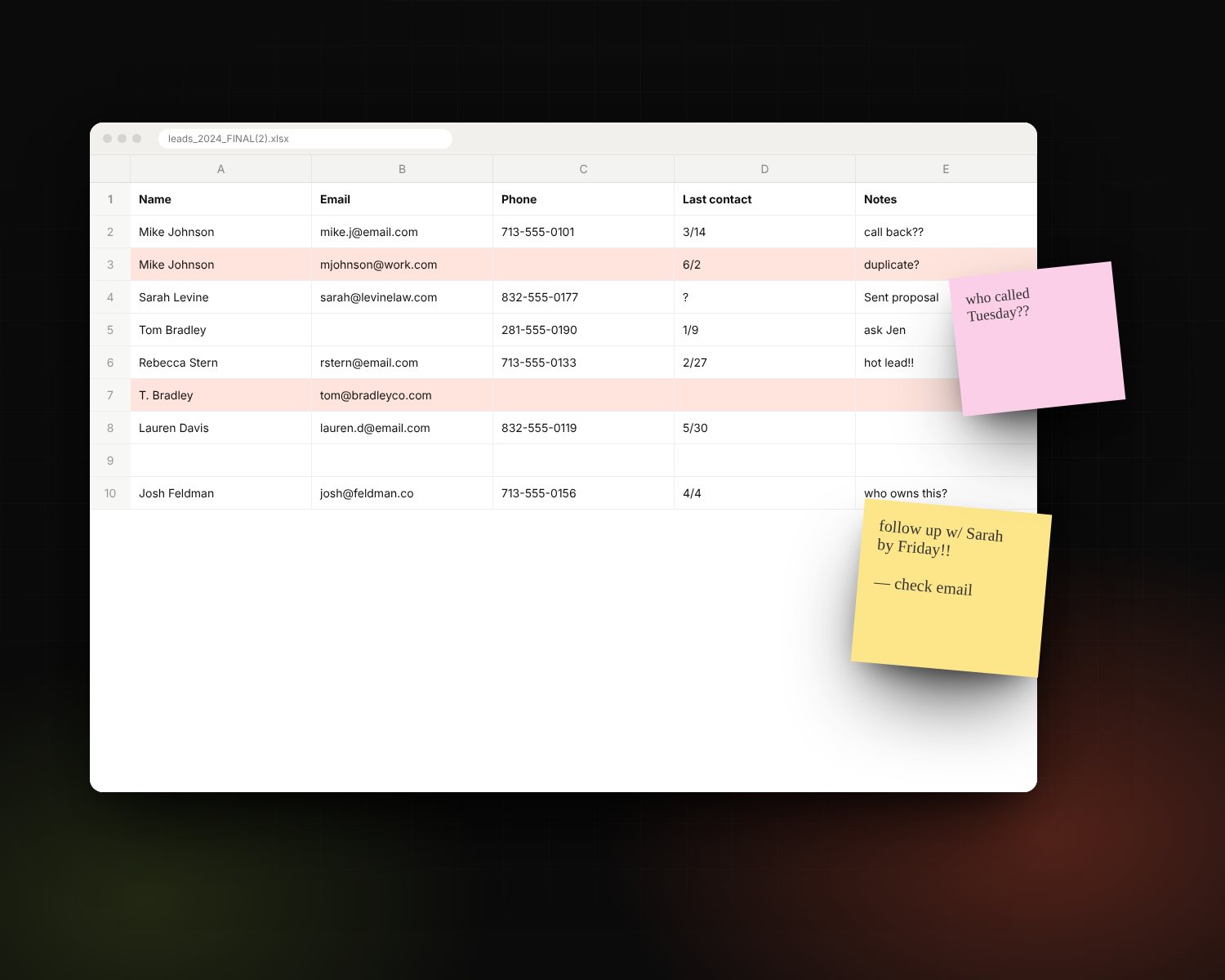
- Follow-ups depend on sticky notes or calendar reminders.
- The same data gets typed into three different places.
- You have more than one person selling or serving customers and they step on each other's toes.
- You can't forecast. You don't know what next month's revenue looks like until it happens.
If two or three of these sound familiar, a CRM will likely pay for itself quickly.
What a good CRM setup actually does
- Captures every lead automatically from your website forms, phone calls, chat and email.
- Shows your pipeline as clear stages, so you see what's stuck.
- Automates the follow-up you'd otherwise forget: reminders, emails, task assignments.
- Keeps a full history of every conversation with each customer.
- Reports on what matters: lead sources, conversion rates, revenue by service.
Why CRM projects fail
Most failed CRMs aren't the software's fault. They fail because:
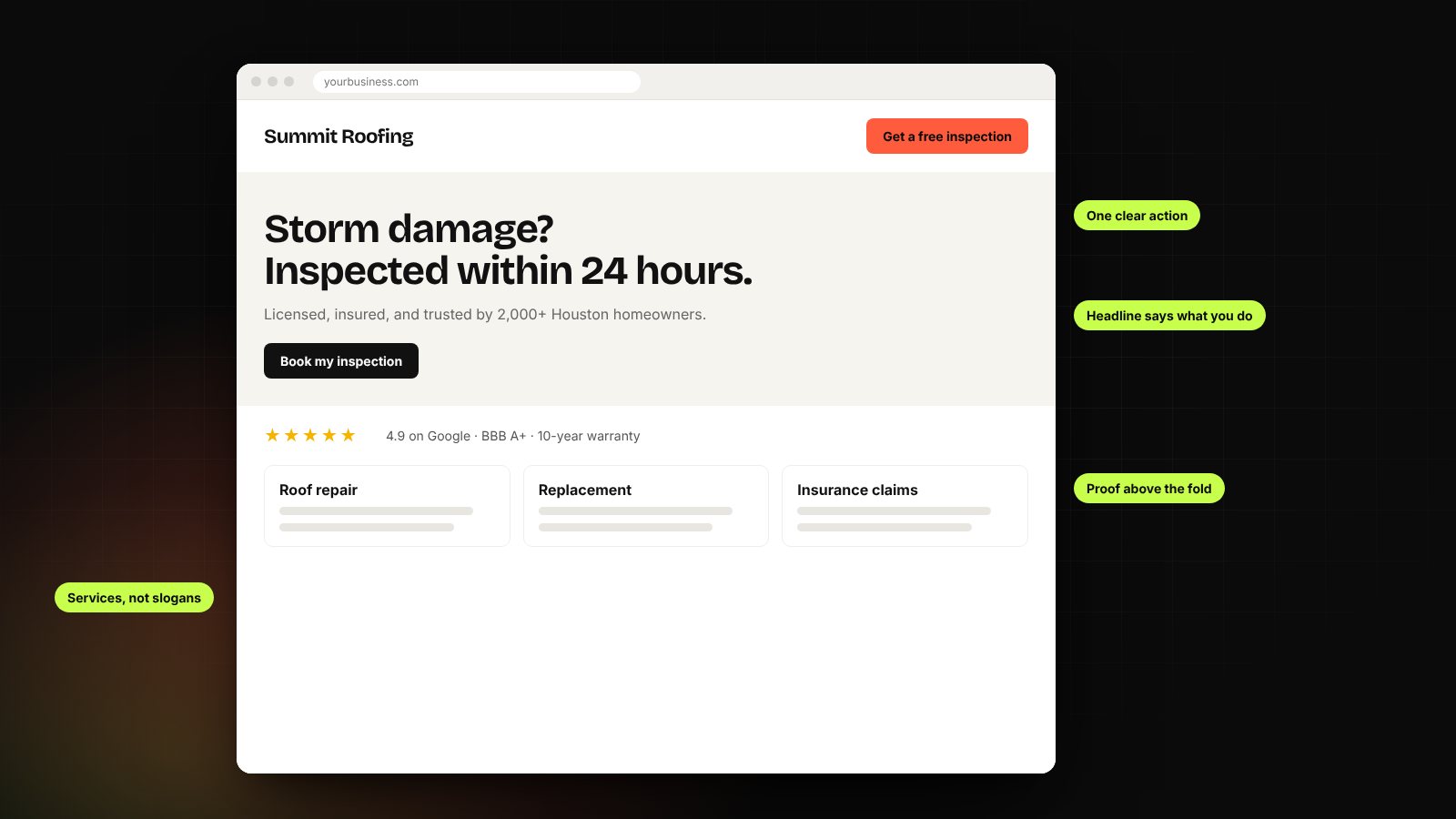
- The setup copies a generic template instead of how the business actually sells.
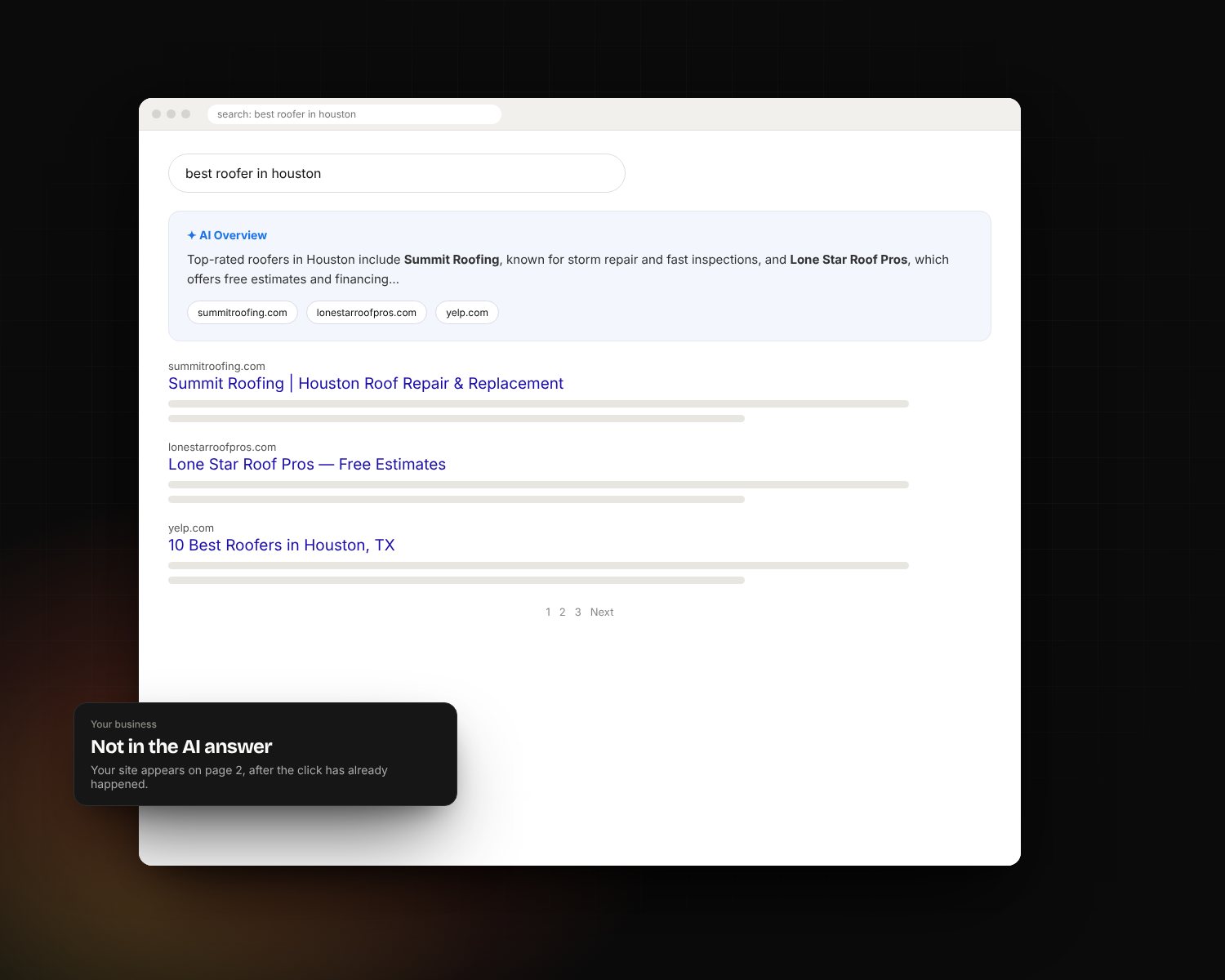
- It's not connected to the website, so leads still get typed in by hand.
- There are too many fields, so nobody fills them in.
- Nobody was trained, so the team quietly goes back to spreadsheets.
How to start without the pain
Map your process first
Write down the steps a lead goes through, from first contact to paying customer to repeat customer. That becomes your pipeline.
Start small
Capture leads, track deals, automate one or two follow-ups. Add more once the team actually uses it.
Connect it to your website on day one
If leads don't land in the CRM automatically, adoption dies fast.
Bring your data over cleanly
Clean up duplicates and old contacts before importing. A CRM full of junk data is one nobody trusts.
Off-the-shelf or custom?
For many businesses, a well-configured off-the-shelf CRM is plenty. If your process is unusual, or you're paying for several tools that each do part of the job, a custom CRM built around exactly how you work can be simpler and cheaper over time. We compare the two in custom CRM vs. off-the-shelf.
The bottom line
A CRM isn't about software; it's about never losing a lead and always knowing what's next. See how we approach CRM development and setup, or read how to fix a CRM your team ignores.