
Short answer: most small and mid-sized Houston businesses spend somewhere between a few thousand dollars for a simple, well-built marketing site and $25,000 or more for a larger custom site with integrations, booking, or e-commerce. Where you land depends far more on what the site needs to do than on how many pages it has.
That range is wide on purpose. Here's how to figure out where your project fits, and what you're actually paying for.
Typical ranges across the market
These are the brackets you'll commonly see when you collect quotes from Houston agencies and freelancers. They're not our price list; every project we take on is scoped and quoted individually after a conversation.
- Template or DIY builder site: roughly a few hundred to a couple thousand dollars, plus monthly platform fees. Fine for testing an idea; limiting once you need speed, SEO control or integrations.
- Professional small business site (5–15 pages): commonly low-to-mid four figures up to around $10,000. Custom design, mobile-first, basic SEO, contact forms, analytics.
- Custom site with integrations: often $10,000–$25,000. Booking, CRM connections, multi-location pages, gated content, advanced forms.
- Complex platforms: $25,000 and up. Client portals, e-commerce with custom logic, membership areas, AI assistants, heavy content migration.
What actually drives the price
1. What the site has to connect to
A site that just displays information is simple. A site that pushes leads into a CRM, syncs appointments, takes payments or answers questions with AI needs integration work, testing and error handling. Integrations are usually the biggest swing factor.
2. Content: who writes it and how much there is
If you hand over finished copy and photos, cost drops. If the agency writes service pages, plans the structure for search, and sources imagery, that's real work, and it's often the part that makes the biggest difference to results.
3. Custom design vs. a theme
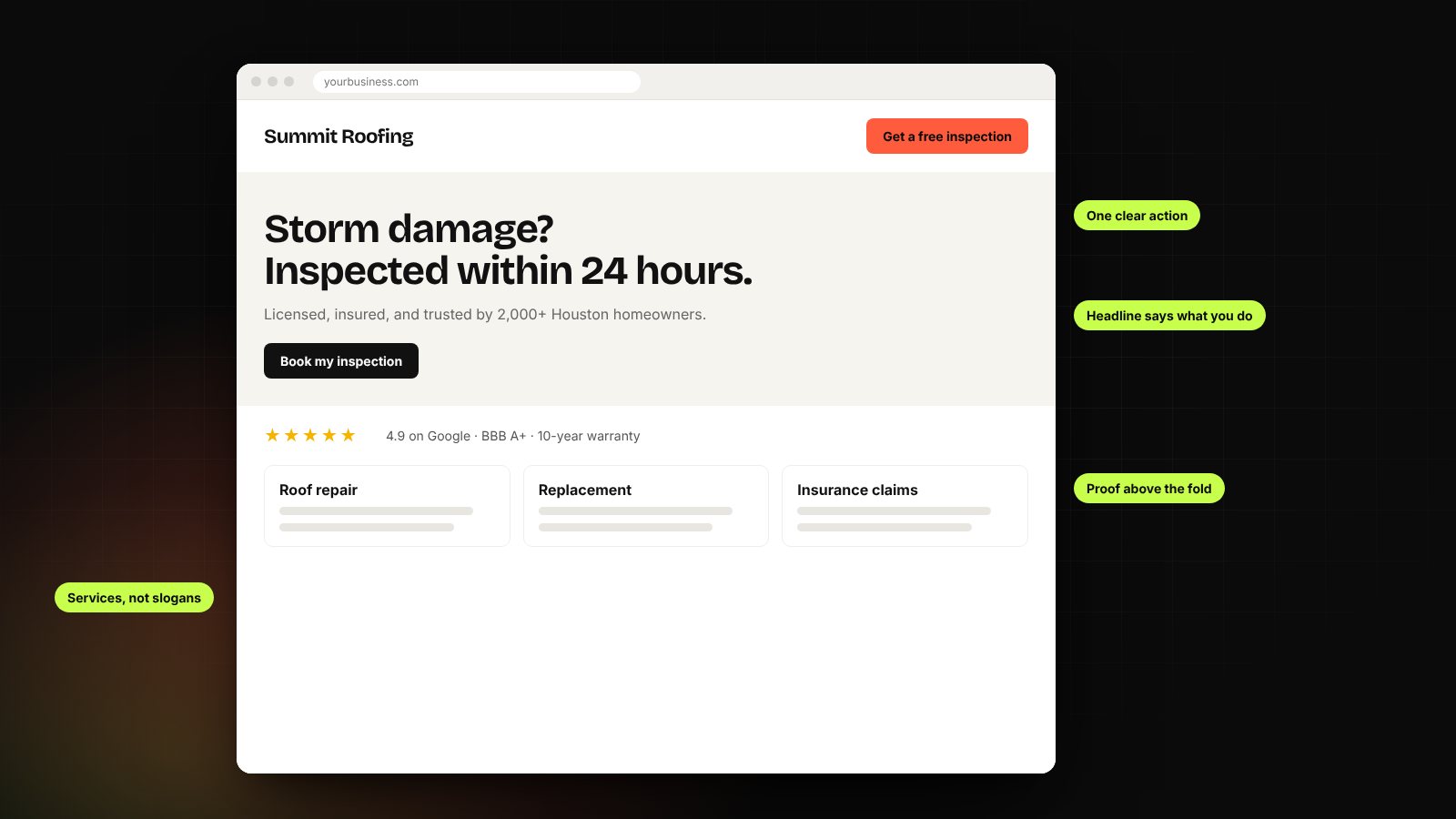
A purchased theme gets you something decent fast. Custom design costs more but lets you build pages around how your customers actually decide, which tends to convert better.
4. Search and AI visibility
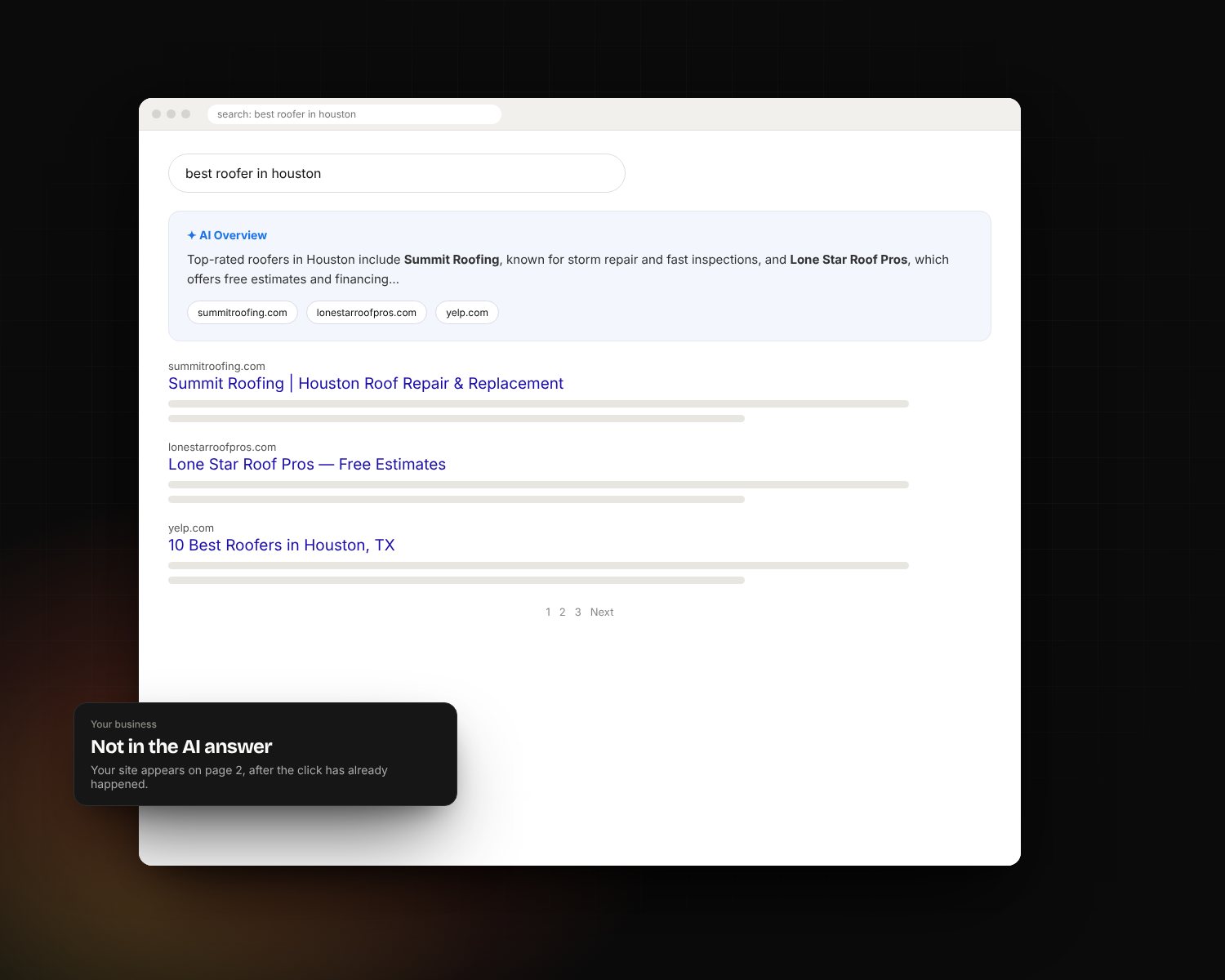
Technical SEO, structured data, page speed work and content planned for Google and AI answer engines add time up front. They also determine whether anyone finds the site after launch.
5. Migration
Moving years of pages from an old site without losing rankings means redirect maps, content cleanup and testing. Skipping this step is one of the most expensive mistakes we see.
Costs people forget to budget for
- Hosting and domain: usually modest monthly or yearly fees.
- Maintenance: updates, backups, security and small edits. Either budget a monthly plan or time for your own team.
- Ongoing content and SEO: a site that never changes slowly loses ground.
- Software subscriptions: booking tools, CRMs, form tools and chat widgets add up.
How to avoid overpaying
Start with the business outcome, not a feature list. "We need 30 more qualified leads a month" leads to a very different (and often cheaper) site than "we need a portal, a blog, a chatbot and animations." Ask every agency to explain how each line item supports that goal.
Also ask what you'll own when the project ends. You should own the domain, the content, the design files and the code, with no lock-in.
Questions to ask before you sign
- What exactly is included, and what would count as a change request?
- Who writes the content, and is SEO planning part of it?
- How long until launch, and what do you need from us to hit that date?
- What happens after launch: training, support, maintenance?
- Do we own everything?
The bottom line
A good website is a sales tool, so price it like one. A $6,000 site that brings in steady leads is cheaper than a $2,000 site nobody finds. If you'd like a clear estimate for your situation, our free growth audit looks at your current site and gives you a realistic scope, or see how our web design and development process works.